Garden drainage in Enfield
If you are dealing with a soggy lawn, standing water on paving, or soil that stays wet long after the rain has stopped, you are not alone. Many homes and commercial properties need garden drainage in Enfield because local conditions can make water management more difficult than it first appears. Heavy clay soil, compacted ground, older garden layouts, and properties with limited fall can all contribute to poor drainage. The result is often a garden that becomes hard to use, difficult to maintain, and prone to damage.
For local customers, the right drainage solution is not about adding one quick fix and hoping for the best. It is about understanding the property, the water pattern, and how the garden is used day to day. Whether you have a small rear garden, a larger family space, a commercial outdoor area, or a shared access path, garden drainage Enfield services can help redirect water away from problem areas and improve the long-term condition of the site.
Well-planned drainage can make a big difference to how a garden looks and performs. It can protect planting beds, reduce muddy patches, improve safety around paths and steps, and make outdoor spaces more usable throughout the year. For homeowners, landlords, property managers, and local businesses in Enfield, drainage work is often one of the most practical investments in the outdoor area.
Why garden drainage matters in Enfield

Drainage issues are often more noticeable after periods of prolonged rain, but they can also show up in everyday use. A lawn that never really dries out may become soft, patchy, and difficult to mow. Borders may become waterlogged and unsuitable for many plants. Paving and patios can collect puddles that linger and create slippery conditions. In more severe cases, water can start affecting boundary walls, sheds, outbuildings, or extensions.
Enfield has a wide mix of property types, from traditional terraces and semi-detached homes to newer developments, flats with communal outdoor areas, and commercial premises with small yards or service spaces. Each of these can present different drainage challenges. Some gardens slope toward the house, some have very little natural fall, and some have old soil structures that no longer drain properly because of years of compaction or previous landscaping work.
Garden drainage in Enfield is also important because local gardens are often used heavily. Families want usable lawns, safe paths, space for children, and low-maintenance planting. Businesses may need practical access routes, tidy outdoor frontage, or areas that remain presentable for customers and staff. Good drainage helps all of that work better.
Common signs of drainage problems

It is not always obvious at first that a drainage issue is the cause of a garden problem. Some customers think the grass is poor, the soil is tired, or the patio has simply aged badly. In reality, excess water may be the real reason behind much of the damage.
Typical signs include water pooling after rain, moss or algae spreading across paving, sinking or soft ground, muddy patches that return again and again, overflow from gutters finding its way into the garden, and soil that feels saturated even when the weather has improved. You may also notice that some parts of the garden dry out quickly while one area remains wet for days.
Other warning signs can include unpleasant smells from stagnant water, plant roots struggling due to lack of oxygen, or visible run-off paths where water is cutting through the garden instead of soaking in. If you are seeing several of these issues, it is worth arranging a local assessment before the problem gets worse.
What causes poor garden drainage?
There are several reasons why a garden may struggle to drain properly. In many Enfield properties, the issue is a combination of factors rather than just one. Understanding the cause is key to choosing the right solution. A patch of waterlogging may need a simple improvement to levels, or it may require a more structured system such as French drains, soakaways, or channel drainage.
Common causes include:
- Heavy clay soil that holds water and drains slowly.
- Compacted ground from foot traffic, garden machinery, or long-term use.
- Poor surface levels that allow water to settle in low spots.
- Blocked or insufficient drainage routes around patios, paths, or boundaries.
- Roof water discharge from downpipes or gutters spilling into the garden.
- Old landscaping that no longer suits the way the property is used.
- Limited natural fall, common in flatter plots and enclosed gardens.
Some gardens in and around Enfield also suffer from water run-off coming from neighbouring properties or shared access areas. In these situations, it is especially important to look at the whole drainage picture rather than just the visible wet patch.
Drainage solutions for local gardens
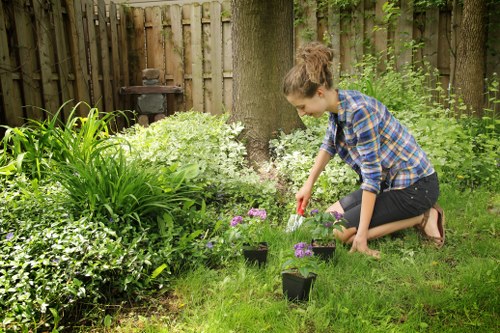
The right solution depends on the layout of your garden, the severity of the drainage issue, and how you want to use the space. A good drainage contractor will inspect the site, identify where the water is coming from, and suggest the most suitable approach rather than forcing a one-size-fits-all method.
Possible solutions may include land shaping, installing a French drain, fitting a soakaway, improving surface channels, replacing or repositioning gutter outfalls, or creating better permeable surfaces. In some cases, the problem can be reduced by adjusting levels or opening up compacted ground to help water move through the soil more naturally.
It is also common to combine drainage work with landscaping improvements. For example, a new patio may need proper falls and drainage channels, while a lawn restoration project may need soil improvement and sub-surface drainage to avoid recurring waterlogging. The best results often come from treating the garden as a complete system.
What is included in a garden drainage service?
Customers usually want to know what they are actually getting when they book drainage work. While every property is different, a professional service should be clear about the scope of the job and the practical steps involved. The aim is to solve the water issue properly and leave the garden in a usable condition.
A typical service may include:
- Initial site inspection and discussion of the problem areas.
- Assessment of ground levels, soil type, and water flow.
- Advice on the most suitable drainage method for the garden.
- Excavation where needed for drains, soakaways, or channels.
- Installation of pipework, gravel, drainage crates, or gully systems.
- Connection to safe discharge points where appropriate.
- Making good the surface after the drainage work is completed.
- Clear explanation of any aftercare or maintenance needed.
For many customers, this practical approach is exactly what they need. It avoids guesswork and ensures the work is completed with the garden’s long-term condition in mind.
How the process works

Most drainage jobs follow a straightforward process, although the details vary depending on the site. First, the problem area is inspected so the source of the water can be understood. That may include looking at rainfall patterns, checking where runoff is collecting, and considering how nearby hard surfaces are affecting drainage.
Next, the best method is planned. In some cases, the answer is to create a French drain along a boundary or behind a retaining feature. In others, a soakaway may be more suitable, especially where water can be dispersed safely into the ground. For paved spaces, channel drainage or improved falls may be needed. If the issue is caused by compacted soil, aeration and soil improvement may be part of the solution.
Once the work begins, the area is usually excavated carefully, the drainage elements are installed, and the surface is rebuilt or finished to suit the garden. The final result should not only move water away more effectively, but also fit neatly into the garden without creating an awkward or unfinished appearance.
Typical stages you can expect
To help you understand what happens on site, here is a simple overview of a common drainage project:
- Inspect the garden and identify the source of poor drainage.
- Discuss options that suit the property and the budget.
- Mark out the drainage route and any excavation areas.
- Install the chosen system with proper levels and materials.
- Test the setup where appropriate and make good the surface.
This kind of structured approach is especially useful for local customers who want a clear, practical service with minimal disruption.
Garden drainage for different property types in Enfield
Enfield includes a wide variety of residential and commercial properties, and each one can present different drainage issues. A small rear garden in a terraced property may have little space for excavation. A larger semi-detached home may have side access that is narrow but workable. A modern townhouse might have patios and paved areas that need discreet drainage solutions. Business premises may need access kept open while work is carried out.
Older homes often have mature gardens with established boundaries, roots, and existing features that need to be worked around carefully. Newer properties may have compacted subsoil left over from development, which can slow down infiltration. Shared spaces, communal grounds, and rental properties can also need a durable solution that reduces ongoing maintenance.
That is why local knowledge matters. A team familiar with garden drainage Enfield work is more likely to understand access restrictions, property layout challenges, and the kinds of surface water issues commonly seen in the area.
Why a local team is useful

Choosing a local drainage service brings practical benefits that matter to real customers. A local team is more likely to understand the type of ground conditions found across Enfield and the nearby areas. They are also better placed to plan for access, parking, and the timing of work in busy residential streets or commercial locations.
In parts of Enfield, side access can be narrow, parking can be limited, and materials may need to be carried through the property rather than delivered directly into the garden. A local contractor used to these conditions can plan the work more efficiently and reduce disruption. This is particularly important when drainage improvements are being carried out alongside landscaping, patio installation, turfing, or planting changes.
Local customers also benefit from a service that understands the wider area. From Bush Hill Park and Palmers Green to Winchmore Hill, Edmonton, Southgate, and surrounding neighbourhoods, drainage issues can vary from one street to the next depending on plot shape, garden history, and surrounding hard surfaces. A local approach helps make the solution more appropriate to the site.
What drainage work can improve
Many people first contact a contractor because of a specific wet patch or puddle, but the benefits of proper drainage usually go beyond the immediate problem. Improved drainage can make the whole outdoor area more functional, safer, and easier to maintain.
Benefits may include:
- Less standing water on lawns, paths, and patios.
- Reduced mud and mess in high-traffic areas.
- Healthier conditions for planting and lawn growth.
- Safer walkways and steps during wet weather.
- Better usability for families, tenants, staff, and visitors.
- Lower risk of water affecting garden structures and edging.
For many customers, the real value is in being able to use the garden again without constantly avoiding wet ground or waiting for days of dry weather before stepping outside.
Preparation checklist before drainage work begins
Before any work starts, it helps to prepare the site where possible. This can make the job smoother and may reduce delays on the day. If you are arranging drainage improvements, a little preparation can go a long way.
Useful preparation steps include:
- Move furniture, pots, toys, and ornaments away from the working area if possible.
- Keep access routes clear for tools and materials.
- Note where the worst pooling happens after rainfall.
- Identify any underground features you already know about, such as old pipework or manholes.
- Tell the contractor about gates, locked access points, or parking limitations.
- Discuss whether nearby planting needs to be protected during the work.
Even when a site is awkward, good planning helps the job run more smoothly. This is especially important in tight Enfield gardens where every metre of access counts.
Pricing factors to consider
Customers often ask what affects the cost of drainage work. While exact pricing depends on the individual property, several factors usually influence the final quote. It is helpful to understand these before requesting a visit so you know why different jobs can vary so much in scope.
Common pricing factors include:
- The size of the area that needs drainage improvement.
- The type of solution required, such as a soakaway, channel drain, or French drain.
- How much excavation is needed.
- Whether the work involves hard landscaping repair or surface reinstatement.
- Access challenges, including narrow side passages or limited parking.
- Soil conditions and the amount of material that needs to be removed.
- Whether the drainage needs to connect to an existing system or discharge point.
Requesting a site-specific quote is the best way to understand the likely scope. A proper assessment is more useful than a quick estimate because drainage problems can be hidden beneath the surface.
Residential drainage solutions
For homeowners, drainage problems can quickly become a nuisance in everyday life. Wet lawns make maintenance harder. Soggy planting beds can limit what you can grow. A patio that holds water may stop you from using the garden comfortably after rain. In family homes, mud and slippery patches are also a practical concern.
Residential drainage work often focuses on creating a cleaner, more usable outdoor space. That could mean improving the way water leaves a patio, protecting a lawn from ongoing waterlogging, or stopping runoff from reaching the back of the house. In many cases, the goal is not just to remove water, but to create a garden that remains manageable through different seasons.
For many local households, this is about making the garden part of the home again rather than a problem area to avoid.
Commercial drainage solutions
Commercial properties and shared spaces in Enfield can have different priorities. A business may need a tidy frontage, a safe rear yard, or a service area that remains practical for deliveries and daily use. Landlords and property managers may need drainage improvements that reduce recurring complaints and keep maintenance straightforward.
Commercial drainage work may involve access planning, phased working to reduce disruption, and durable materials that stand up well to regular use. In some cases, a more discreet or robust solution is needed because the area receives heavier foot traffic or needs to remain presentable for customers and staff.
Whether the site is retail, office, hospitality, or mixed-use, effective garden or yard drainage supports a cleaner and more reliable outdoor environment.
When to consider getting help
You do not need to wait until the garden is unusable before asking for support. Early intervention can prevent a small issue from turning into a larger and more expensive one. If the same area stays wet after most rainfall, if mud keeps returning, or if water is beginning to affect hard landscaping, it is sensible to arrange an assessment.
It is especially worth taking action if:
- Standing water remains for more than a day or two after rain.
- Plants are failing in a specific area despite proper care.
- Paths or patios are becoming slippery with algae.
- Water appears to be tracking toward the house or outbuildings.
- You are planning new landscaping and want drainage built in from the start.
Contact us today if you are ready to improve the way your garden handles water and want a practical solution that suits your property.
Areas covered around Enfield
Local drainage work is often needed across a wide area, not just in one town centre. Customers in nearby neighbourhoods may face different soil and layout conditions, but the need for reliable drainage is the same. Work is commonly requested in and around Enfield Town, Bush Hill Park, Palmers Green, Winchmore Hill, Southgate, Edmonton, Oakwood, Ponders End, and other nearby residential and commercial locations.
Because gardens vary so much from street to street, it is useful to have a service that can adapt to different spaces, from compact terraced plots to larger suburban gardens and business courtyards. Local experience helps ensure the solution matches the property rather than forcing the property to fit the solution.
Frequently asked questions
Below are some common questions from customers looking into drainage improvements for their garden or outdoor area.
Why is my garden always wet even when it has not rained recently?
This can happen when the soil drains slowly, the ground is compacted, or water is entering from another source such as a downpipe or neighbouring surface. A proper inspection is usually needed to find the cause.
Do I need a full drainage system for a small garden?
Not always. Smaller gardens may only need targeted improvements such as better levels, a short drain run, or a discreet soakaway. The right answer depends on the layout and how the water moves across the space.
Can drainage work be done without ruining the look of the garden?
Yes, in many cases drainage can be installed in a way that blends into the garden. The finish can be designed to suit the existing landscaping, or the work can be combined with a wider garden upgrade.
How long does garden drainage work usually take?
That depends on the size of the area, the type of solution, and the amount of excavation involved. A small job may be fairly quick, while a more complex site can take longer. A site visit is the best way to estimate the timescale.
Will drainage fix every wet area in the garden?
In most cases, the aim is to solve the cause of the problem and significantly improve the area. However, the best solution depends on the ground, the levels, and the space available for installation. A professional assessment will show what is realistically achievable.
Is drainage work suitable before turfing or landscaping?
Yes, and it is often the best time to do it. If you are planning a new lawn, patio, or planting area, putting drainage in place first can save trouble later and help the finished garden perform better.
Choosing the right service for your garden
When comparing options, look for a service that focuses on practical problem-solving. The best approach is usually the one that fits your property, your budget, and your long-term plans. Clear communication matters too, especially if the work is being carried out in a busy home or commercial setting.
A good drainage service should:
- Listen carefully to the issue you are experiencing.
- Inspect the garden properly before suggesting a fix.
- Explain the options in straightforward language.
- Respect access limits, neighbours, and property boundaries.
- Focus on a finish that is both effective and neat.
That is what customers usually want from garden drainage in Enfield: a sensible solution, a tidy result, and a garden that works better in everyday use.
Book your service now
If your outdoor space is struggling with standing water, soft ground, or poor runoff, now is the right time to deal with it. Drainage problems tend to get worse with repeated rain, and the sooner they are assessed, the easier they are to manage. Whether you need help with a private garden, a shared outdoor area, or a commercial space, a local drainage service can provide a solution that is suited to the property.
Request a free quote and arrange a visit to discuss the best options for your site. If you are looking for dependable garden drainage Enfield support, contact us today and take the first step toward a drier, more usable outdoor space.
Book your service now and give your garden the drainage improvement it needs.